The electricity was initially produced using renewable energy sources like hydraulic energy.
Hydroelectrical power is the first invention to produce electricity in large quantities.
After the Hydroelectric power, engineers worked on Thermal Power Plants and then Atomic Power Plants. There is one other alternative energy source available to produce electricity, called wind power and tidal power.
Read: Green Energy: Your Complete Guide on Wind Power to Generate Electricity
Read:- Tidal Power: A Brand New Alternative Energy Source for Electricity Generation
In this article, I am going to share the information on Hydroelectric Power stations.
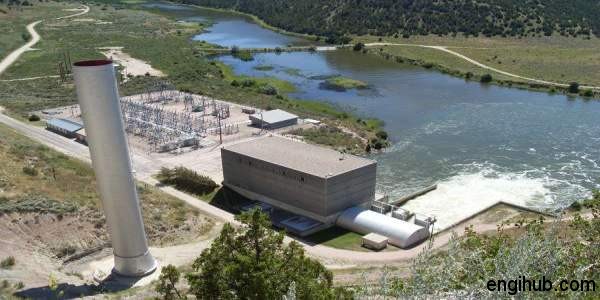
The engineers in Hydroelectric Engineering who work on hydro-electrical power plants have to concentrate mainly on the following essential sections,
So, Here Are The Essential Sections of a Hydroelectric Power Plant
Storage Reservoir
The reservoir is the section where the available water from the catchment area is stored.
The storage reservoir may be natural or artificial, based on the requirement of the plant.
The engineer has to decide the sufficient capacity of the reservoir.
Because this water should be available for running the turbines.
So, we can produce the required quantity of hydroelectric power.
Read:- Hydroelectric Energy: Complete Information on one form of Clean Energy
Dam And Other Parts
A dam is constructed across the river.
This reservoir is on the upstream side; hence it will check the flow of water and impound it.
The size and type of dam depend upon the character of the river, head of water, the amount of discharge, etc.
The dam is provided with gates for regulating the flow of water.
An automatic arrangement is given for the overflow of the excess water.
Water Ways
A passage through which the water is carried from the dam to the power station and then to the river is called waterways.
The upper portion is known as a head race while the lower portion is known as a tail race.
The waterways may be in the form of Tunnels, Canals, or Pipes.
Just upstream of the Hydroelectric Power Station, a Surge Tank is provided.
So, this will eliminate the effect of the water hammer. It will also control the variations in pressure.
PowerHouse
This is the place, where Water Turbines and Electric Generators are installed.
The design of the hydroelectric powerhouse is very complicated and requires a lot of engineering skills.
The availability of space, transport facilities, etc. factors will decide the position of a powerhouse.
The size of a hydroelectric power plant is decided by many factors. Such as water supply head, type of units, number and size of units, electrical arrangements, etc.
For better efficiency and maximum power production, the electrical generators are directly coupled with the turbines.
The turbines may be designed and installed with horizontal or vertical shafts.
In a horizontal shaft layout, the whole installation lies on the same floor.
The advantage of this layout is, easy to inspect, service, or any other modification in the hydroelectric power plant.
In a vertical shaft layout, the generators are spaced well above the water surface.
Hence it will make it convenient to connect the incoming pipe and outgoing draft tube.
If you like the post, share it with your friends and also on social sites.